Saturday, March 29, 2014

Romantics Anonymous


Someone wrote that Romantics Anonymous is a cup of warm cocoa, and I think that fits it better than I could.  I can describe this movie as sappy, corny, sweet, funny, quirky, and just an overall nice movie, but somehow that can come out sounding bad?

I mean, let's get this strait, this movie is not going to make you rethink or change your life, but that's not what it set out to do.  The movie has set out hoping that you find a little of yourself in these neurotic, afraid of everything characters.  But then that could turn people away too, I certainly would have had a hard time convincing myself to watch a movie about social anxiety laden people, but it somehow does it without being annoying.  American cinema, romantic comedies especially, rely on "annoyance is funny" of which I despise.  Romantics Anonymous never felt annoying, it felt warm, and silly, and was just overall a warm cup of sappy cocoa.

A small summary of the concept: Jean-Rene and Angelique are both socially awkward people.  Angelique is in a group of strongly emotioned people that get overwhelmed but have formed a group therapy session to help each other with it.  When she gets asked questions or becomes the center of attention she has a panic attack and frequently faints.  This has cost her a job as a chocolate maker. in the past.  Jean-Rene is the inheritor of an old fashioned chocolate boutique, he has inherited his father's fear of the world as well.  He goes to a therapist that challenges him to try new things.  Angelique chooses this shop to apply for a job, while Jean-Rene's challenge is to ask someone to dinner.

There is a small cast of quirky individuals that reminds me of the kind of casts in Hedgehog and Amelie, and they all do their job very well also.  The stars make the movie though.  Angelique is played by Isabelle Carre, and she's kind of quirky like Amelie, but she has this Pam Beesly(Jenna Fischer) from The Office quality to her.  She is played well, but I feel the star performance is by Jean-Rene's actor Benoit Poelvoorde.  He is what separates this movie from the Hollywood drivel that comes out here in the states.  He's funny, and almost clown like in his mannerisms, but plays the part strait at the perfect times.

If you like the 90's era un-edgy romantic comedies like Sleepless in Seattle, Jerry Mcquire or You've Got Mail, I think you could come to like this movie.  Oh, and if you don't want to see an hour+ movie with chocolates as a centerpiece, stay way, this will make you crave chocolate.  Here's a trailer:


Wednesday, March 5, 2014

My Experience with Frozen

I came into Frozen with a cold heart(I'm a blogger!).


I find myself in this weird world where Disney is not making any hand animated features, and Pixar is endlessly putting out horrible sequels to my least liked Pixar movies.  I don't like this world.  The thing is... the Disney Studio's recent CGI movies are trumping Pixar.  Wreck-it-Ralph overcame my skepticism early with its first trail.  It has a hand up when it comes to me because its based on video games, and thankfully it was created by people who actually loved video games(of all eras).  Wreck-it-Ralph was amazing in all categories.  Frozen, I wanted to hate Frozen.

Frozen had no excuse to me as to why it was CGI and not hand animated.  It was a Disney princess tale, not a movie about computer created characters.  I disliked Tangled, which I thought would have been better animated by hand.   I started picking Frozen apart early, starting with the fact that it was in development hell for years.  Then I saw the advertisements.  It was so "formula" based it solidified my want to hate it.  The snowman thing looked horrible, sounded horrible, and seemed unneeded.  It was like it was an afterthought, but hey, they chose to use it as a huge advertising focus.  Then there was the whole "dumb guy, smart princess" thing that was funny when it was first done, but now probably 1/2 of Disney movies use this dynamic... oh and 100% of today's sitcoms.  It also looked so damn much like Tangled.

Then I watched it.  I said to myself "you know what, even if its a crap story, and annoying characters, I will be in a theater, and I'm virtually guaranteed to see some amazing landscapes.  Early on I really liked that the two Princesses were not enemies.  This was a movie made for sisters to watch together.  It is a dynamic not explored in Disney before.  Then they also had some hard political intrigue.  I'm not talking "oh no the guy from the other nation doesn't like things", I mean they had economic manipulation and diplomatic position shifting.  Another bonus for me.  The stupid animated snowman never redeemed himself.  I took the opportunity of his song sequence to go take a piss.

I think it turned around for me during the amazing landscape sequence I was waiting for, because the song was amazing.  The song sequence "Let it Go" is easily the highlight of the entire movie for me.  I got the incredible visuals I was expecting, and a pretty good song I was not.  Disney has not had a super strong song in a feature for many years, especially not one that people would go out and buy a soundtrack for.  I just wish the rest of the songs were catchy like in the early 90's movies, but these days 1 good one is good enough.

Good enough for an Oscar.  Idina did an amazing job on the Oscars right before they announced that Frozen had won for best original song.  Even during the Oscar performance, I was like "this is a very powerful song".  I can even overlook the incessant need for people to put a "let's talk in the song like Pink" part at the very end.  Its the very end, I can get over it.  Then the pair that came up to accept the Oscar were like the most bubbly and funny pair I'd seen at the Oscars all night.  They also looked like normal, every day people among a sea of plastic and paint.  I was very happy for them.


I'd own Frozen.  A rare sentiment for a Disney/Pixar movie in the past decade.


Tuesday, February 25, 2014

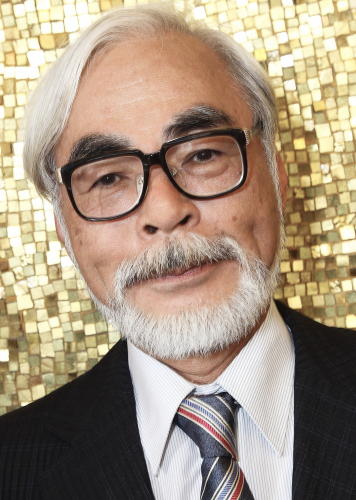
The Relationship of Miyazaki and Disney

Many people of my generation would point to John Lasseter being the great "Walt Disney" of our times, and its understandable to do so.  To his credit though, John Lasseter has repeatedly pointed to his own personal hero to claim that mantle:  Hayao Miyazaki.  


Miyazaki is an animator and illustrator from Japan that has taken the Japanese, and now American audience, to fantastic places for over 40 years.  His films are national treasures in Japan, to the point that factories shut down when they are released because so many would schedule their days off during them.  Miyazaki is the head of Studio Ghibli, which do other movies aside from his own, which are each wonderful in their own ways as well.  It is an extensive catalogue.

This catalog was to be bought by Disney in the late 90's.  Many thought that this would mean we would get great versions of them brought to our shores.  In video games, the Japanese games were at their height.  On television the Dragon Ball and Sailor Moon craze was in their zeniths as well.  That fact such a large company bought the rights to Ghibli distribution should have been a cause for celebration.  Unfortunately the lead of the studio saw Ghibli as a competitor.  They were afraid these wonderful movies would detract from whatever half assed direct to DVD sequel they were pumping out that week with horrible quality animation, and shoddy voice acting.  The catalog was bought for one reason: to bury it so that western audiences would never see it.

This is where John Lasseter came in.  Disney was feeling the pinch of their horrible decisions around the turn of the millenium.  Their biggest hits were done by Pixar, a studio that was not yet part of Disney.  John Lasseter wrote into the contract that he would in charge of Studio Ghibli's western distribution, and since Disney needed Pixar, they consented.

Many times since, we have been getting good quality transfers of Ghibli films, and Oscars have either gone to Lasseter's Pixar stuff or Miyazaki's Ghibli movies.  While Lasseter does not make the movies himself, you can see why and how Miyazaki has influenced the kinds of things Pixar green lights.  From Up to Wall-E, you get that warmth and quirky charm.  While the earlier stuff is niche still, and largely unknown, the stuff released since Lasseter got in charge of it, are known and loved by critics and movie audiences a like.

Ghibli movies are spectacles.  You are guaranteed to be transported to a place you never imagined.  To places that are not yet stereotypical here in America, and treated to stories that are heart warming, quirky, and less about princesses in castles rescued by the quarterback. 


This is the end to my post about Miyazaki and his relationship with Disney, but it surely will not be my last post about Ghibili.  I have watched almost all his movies, and the movies of Ghibli not done by him, several times each.  I should do reviews and try and get others to watch them as well.

Thursday, December 26, 2013

Movie: When the Last Sword is Drawn review Part 2

When the Last Sword is Drawn(WTLSID) is worthy of being proclaimed as a "Best" movie.  To be a best movie, you have to have: great writing, great cinematography, great acting, and great music.  Its the category I put movies like Lawrence of Arabia in.  There are favorite and great movies that deserve distinction, but maybe not "Best" because the writing is terrible, or the camera work is one dimensioned.

WTLSID is not a very quotable movie.  It does have a couple of places, but its not a book that is going to spawn scripture.  Writing is not just quotable dialogue though, it is also how and why things are said... or as in WTLSID, what can be left out.  The classic samurai movie is like the classic samurai swordsmanship, you do not waste movement.  Things are left unsaid, and you are given time to think to yourself "oh, this is that, and this is how" in your own mind.  It is something many movies made in Hollywood has forgotten, that sometimes you don't need every little emotion spelled out in dialogue.  WTLSID's dialogue is understated and elegant.  If I had not seen Takita's other work, I would assume he was just trying to cop on the Kurosawa feel of samurai movies, but since his other work does not have samurai, I know that his style is coming through.  We are meant to think and to make connections, and this allows us to interject our own emotions into things.  Its like the perfect combination of reading a book and watching a movie.  So much of yourself goes into the imagination while reading a book, its nice to see movies that give us a little of that as well.

The cinematography is sweeping while being intimate.  There are no large scenes of armies marching through valleys, or wide vistas of desert.  Instead we have motion and focus on the close up.  The camera is not simply sat in front of people while they talk close up, we have interesting camera changes and angles, all the while keeping the focus on what is going on.  Anyone can plop a camera down and say "here talk into it", this is not what happens in WTLSID.  How Takita does this, I have not grasped it yet, as you can tell I have trouble translating it to text.  I'm not saying he flies around in the faces of actors, or that he sweeps motion throughout all crazy cam style.  I'm just saying, his intimate camera work is not claustrophobic.  By the time he does Departures, he's even better at it, but he does it well here.

The acting all around is a perfect example of period and genre.  The real clash of personality is in the two main samurai, Yoshimura(Nakai) and Saito(Sato).  Both won their Japanese Oscars as Lead and Support. At first you think Nakai's role is the stand out one.  He is the focus, and we see him as both a struggling loving, family man that has to take on this new personality in a new clan.  When no one is looking, we see into him, and the pain it takes to act as he does.  There is zero hint at this inner struggling while others are watching, and its a great choice by the actor.  Too many times in OTHER movies we see the inner struggle come out and wonder why no one around the character seems to care at obvious signs.  Nakai deserved his award.  Taking a second look at the movie, you may realize that it was Sato that really stretched his acting skills for this role.  He has to play both a young, but troubled character, and an old, wizened one.  All the while, convincing us he is the same man.  After the emotion of seeing who he is, and knowing what really is in his heart, the 2nd viewing of the movie, watch Sato, he is the star on second viewings.

When the Last Sword is Drawn is a period piece, and has an appropriate sound track.  You don't go around humming The Godfather's soundtrack, and you won't go around humming this soundtrack either, but it is there, its appropriate and its masterfully done.  When things get tough, and when the drama increases, you will feel your own feelings raise and the music will get your heart aching or pumping, whichever the movie needs.

Things that were off about the movie?  Even after all my praising of understatement, sometimes I feel like not enough was spoken.  There is a side journey your mind takes, trying to figure out Saito, and you will get there, and you will have independant revations about the character as you remember the circumstances of the beginning of the movie, but you are meant to do all that while digesting the other parts of the movie.  Sure, it leads to the "oh he's... awwwe, ok, I see now" moments, but I would have liked to have seen some more of the older Saito.  The entire movie, Saito says one thing about Yoshimura, and we are supposed to realize he means the other, but I would have liked a little better closure about his thoughts on Yoshimura, rather than leaving it fully to be inferred.

Just a little maybe.

Also there's a couple of side plots that seem to not get developed as much, a few characters that might have needed more screen time for their roles to give us as much emotional kick as other characters give us, but all in all, I am having a hard time finding a reason to complain.  If you're in this for super samurai badassness, then go pick up 13 Assassins, because you will not find lots of it here.

I give the movie 5 out of 5 stars, easily my favorite 21st century Samurai movie to date.  A worthy successor to the style of Kurosawa.


Friday, December 6, 2013

Movie: When the Last Sword is Drawn Part One

*Disclaimer: my thoughts on movies in this blog tend to follow a format.  I do not write about movies unless I have a lot to write.  They are generally broken into 2 parts.  One is a personal history with the subject matter, maybe a little learning thrown in there, and some other stuff.  Part 2 is where I focus on the movie.

Part 1

I grew up loving samurai movies and not realizing it.

I am of course referring to the mass of spaghetti westerns that my father watched all the time.  To make a long story short, basically a few Italian directors saw the masterpieces that the 1950's Japanese film industry were churning out, and decided they could adapt them for a Western(both literal and figurative) audience.  Seven Samurai was turned into Magnificent Seven.  Yojimbo was turned into Fist Full of Dollars.

Much of the intensity and focus of those spaghetti westerns comes directly from the influence of men like Kurosawa.  The directors of the Italian adaptations largely put their own spin on things, but that intensity of the moment, the drama of long camera pans lasting just a little bit longer than they felt they should, that comes from the samurai movies they emulated.  I think that is why I really don't care for many Westerns that come out today.  They've lost that intensity.  They are more concerned with getting their half-historical, half pandering plot out on the table than filming something with intensity and drama.

I think I now seek out Samurai movies to fill that void left by good Westerns.  I have watched many of the Kurosawa classics era, and a handful of more modern treatments.  I expected that the later I go, the closer it would come to the same cycle as Spaghetti Westerns.  I expected the old to be raw and intense, while the modern to be overly concerned with getting things "right" and less concerned with getting things "watchable".

I hate Kill Bill.

Kill Bill poisoned the well and caused many of the greatest samurai movies ever made(the 2000's are a revival of them in Japan) to be passed over because they were not "Kill Bill" enough.  Ironically, what Kill Bill did was pave the way for a lot of mediocre Hong Kong action movies to get brought over here, while the Japanese renaissance of Samurai movies were passed over.

Yojiro Takita.

I first saw one of his movies when I watched Departures.  Departures will be getting its own posts eventually, it is one of the best, most heartfelt movies I have ever watched.  Now that I have watched his Japanese Oscar winning "When the Last Sword is Drawn", I now realize why.  Every scene, every emotion, is INTENSE.  Just like a Samurai, Yojiro Takita has fashioned his film making into never wasting energy, never wasting emotion, never wasting a moment.

It makes me wish we had a Neo Sergio Leone making modern Westerns, but I guess that whole style is still found where it originated over half a century ago, and I have a lot of movies to go through that I had never thought to go looking for.

 Much of the thanks has to go to Netflix for bringing a lot of this stuff to view here in America.

Thursday, July 11, 2013

Movie: The Last of the Mohicans Part 2: The Actual Movie


I have always liked the scenery in this movie.

This movie was filmed in my back yard, and the foliage combinations look familiar.  So do the views, which are very reminiscent of The Great Smokey Mountains.  These areas are beautiful outside of the movie, and that helps them a lot.  Despite the cinematographer's tendency to induce claustrophobia during intimate scenes(I swear he puts a camera in someone's armpit sometimes), when he backs the camera up he is able to capture their beauty.

Daniel Day-Lewis is here in all his hyphenated last name glory.  People looking to find a bombastic performance like that of There Will Be Blood or Gangs of New York will not find that character here.  Hawk-eye and those he travels with are very solemn.  It is the script that limits almost all the actors in this story.  Day-Lewis' role, except for near the end and one bit of very close in, quiet exposition, is regulated to snarky, one liner, smart ass comments at "stupid white people".  All the best stuff is given to the British characters, and by and large they deliver the lines without stumble, and with convincing feeling.  The most emotional kick comes from Russell Means' Chingachgook, but sadly that comes late in the movie.

By 1992 standards, this movie has lots of action.  This movie is obviously before fight choreographers got top billing.  The colonial fight scenes can hold no candle to the likes of Mel Gibson's The Patriot, but for its era it was visceral.  Watching Hawk-eye use any weapon he can get his hands on to take out the enemy is great, and even though these are single shot muskets, there's always some lying around that he can grab and put to use.  The use of tomahawks and clubs result in blood splatters and sickening thuds, and in general this adds to the fear of seeing your favorite character in a fight at all.  Largely the mass combat of the British vs French war is regulated to "hearing" and not "seeing".

Romance from a Romantic Era writer is going to remind you a lot of Romeo and Juliette when looked at with a modern eye.  These people fall in love forever, at the drop of a hat.  The primary love story plays out between Cora and Hawk-eye, but the whole time you're thinking "but what about her fiance'?"  In the Romantic Era, this would have been the usual kind of "destiny" love story, but today is just looks like Cora can not keep her lips off this savage, masculine white guy raised as a noble native.  Even throwing away her Fiance' because she can not resist the animal urge of his rough nobility.

Amazing scenery when it gets the spotlight.
Competent acting with several spots of true greatness showing through.
High and deadly action when it is needed.
So so romance.

Most criticism is a stretch and generally does not detract from the overall experience.  A great movie worth watching.  I gave it 4 out of 5 stars.


Wednesday, July 10, 2013

Movie: Last of the Mohicans Part 1

The Last of the Mohicans seems a perfect movie to start all this off with.

Why?

Well this movie has quite the history with me, which will be the focus of Part 1 of my post about the movie.  This post is about my personal history and so might be boring for the rest of you, but a trip down memory lane for myself.

I have often told people that before the 2nd half of 2nd Grade, I was not much of a student.  Outside of standardized tests(which I've always excelled at), I was horrible at doing daily work.  I think I always loved learning new and interesting things, but I have always hated repetitive busy work.  At the end of 2nd Grade a few things came together that changed my life.  The reading of Greek Myths and the eventual discovery of King Arthur along with the Dragon Warrior video game ignited my interest in reading.  Once I started, I could not get enough.  There was a particular King Arthur book I checked out and re-read over and over.  It was not till 3rd Grade that I really began reading by the boatloads.

Pizza.

I love food.  Anyone that knows me knows that I'm not dead as of this typing, and that is largely because I eat.  Eating does things like provide nutrients, but also provides a sort of pleasure that if you have not eaten, then I can not describe accurately.  Try eating, I whole heartedly suggest doing it several times a year.

In 3rd grade there was a program that if you read a certain amount of books, you got a free personal pan pizza from Pizza Hut.  That year I read so many books that just about everyone except my mother questioned it, to them it seemed like this student who a couple of years before was slightly under achieving, was gaming the system for pizza.  No way could I be the number 1 reader in my class.

At first my teacher questioned me about the books.  Then other teachers who saw I was leading the whole grade would come and quiz me about the books.  Eventually even the principal, a man that had worked with me in my early years, came by and questioned me.  I did not realize myself just how well I remembered things I read back then, but I could rattle off facts and quotes from books that were 10-20 books down on the list.  It satisfied them all, and I was never questioned again.

So what did I read during all of this?  Well my school had this gigantic collection of "famous childhoods" semi-biographies on the shelf.  The majority of them were based on presidents and frontiersmen.  I read the childhoods of Thomas Jefferson, Daniel Boone, Davy Crockett, but also the lesser knowns such as Ethan Allen, Will Clark, and Kit Carson.  Interestingly, they also had the Native American series of famous childhoods, and through them I was able to get a view of the other side of the frontier expansion.

One of these books I particularly liked:  James Fenimore Cooper.  I do not know if it was his strangely fun to say name, or what, but I liked his book.  I had no clue much about why he was famous, I think in the back and the beginning they mentioned he was an author about the frontier.  It was around the beginning of 4th Grade that the movie, Last of the Mohicans was released.  I actually got to go and see it when it was new because my best friend at the time was going to see it with his family and I was invited along.

You have to understand that I am much more a "read it and remember it" kind of person, and at this age this movie was really all over the place for me.  First, I have never been in a huge theater like this before.  Earlier I had my first Chinese food EVER when the family ate at a restaurant.  The scenery of the movie was amazing, there were a lot of characters to keep up with, and and... well I loved the movie as a kid, but I would have to see it a few more times once it came out on video before I fully understood everything that was going on.

I would be in "frontiersmen" mode for a couple of years.  I ran out of books in the library about that subject, and I had recently began thinking maybe baseball was something I was interested in(the Braves were the most successful baseball team at the time, and Atlanta did not have much luck in the 80's, so the early to mid 90's was a new golden age, but I'll save that for some baseball movies later).  Watching Last of the Mohicans is kind of like revisiting a very formative time in my life, one that I felt instilled in me a lot of my values.

Despite that, I do not watch this movie with rose tented glasses in my adult life, there are flaws, but that's for Part 2.